



Glucose-6-Phosphate Isomerase (GPI)
Glucose-6-Phosphate Isomerase; GPI/G6PI
Glucose-6-Phosphate Isomerase (GPI), the second enzyme in the glycolytic pathway, is a dimeric enzyme that catalyzes the conversion of glucose-6-phosphate to fructose-6-phosphate. Glucose-6-Phosphate Isomerase has been linked to the proliferation and motility of cancer cells via its control over glucose-6-phosphate levels. Aside from being a glycolytic intermediate, it has been seen that in certain cancers glucose-6-phosphate can act as a tumor secreted-cytokine as well as an angiogenesis-promoting factor. Moreover, Glucose-6-Phosphate Isomerase induces the expression of a matrix metalloproteinase-3 protein in some cancer cells, which subsequently increases tumor invasiveness[1].
All Product Categories
-
Glucose-6-Phosphate Isomerase (GPI) Related Products (7)
Related Products (7)

-
2-Deoxy-D-glucose 6-phosphate disodium
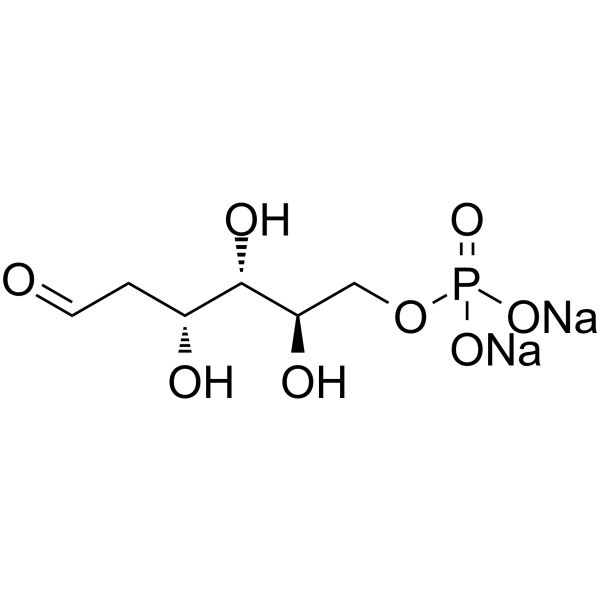 0 Images2-Deoxy-D-glucose 6-phosphate disodium is an ATP-competitive, 2-deoxy-D-glucose non-competitive Hexokinase inhibitor, with a Ki value of 1.45 mM against bovine heart hexokinase. 2-Deoxy-D-glucose 6-phosphate disodium exerts ATP-competitive and 2-deoxy-D-glucose non-competitive inhibitory effects on bovine heart hexokinase. 2-DG inhibits glycolysis via the production and intracellular accumulation of 2-Deoxy-D-glucose 6-phosphate disodium, thereby inhibiting the functions of hexokinase and Glucose-6-phosphate isomerase, and inducing cell death. 2-Deoxy-D-glucose 6-phosphate disodium can be used in cancer-related research.
-
Thr101
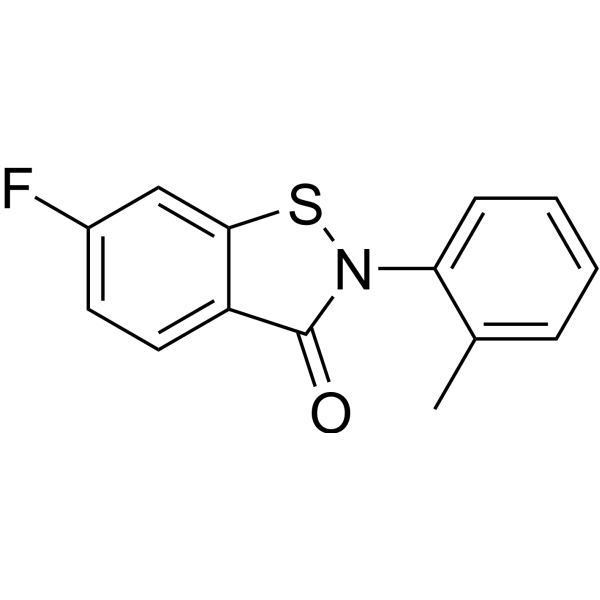 0 ImagesThr101 is an inhibitor (IC50=2.9 μM) of phosphomannose isomerase (PMI).PMI can compete with phosphomannose mutase 2 (PMM2) for the binding site of Man-6-P and convert mannose-6-phosphate (Man-6-P) into fructose-6-phosphate (Fru-6-P) .Thr101 only specifically inhibits PMI and not PMM2. Thr101 can be used for research of congenital disorder of glycosylation type Ia (CDG-Ia).
-
G6PI 325-339 (human)
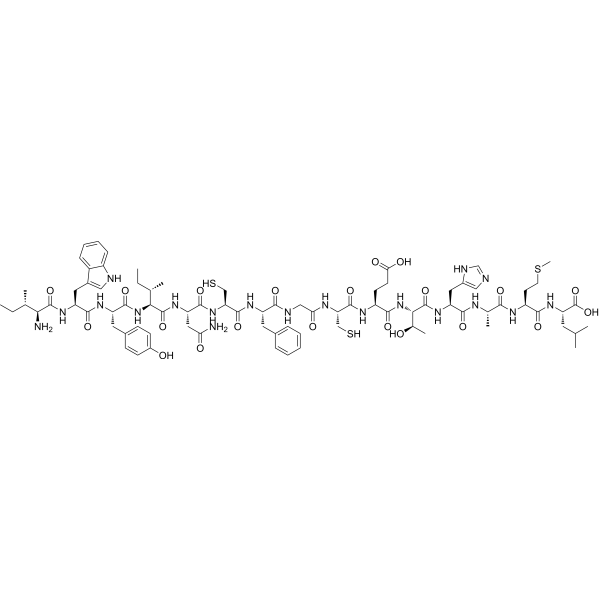 0 ImagesCat. No.: HY-P10109CAS No.: 1174631-35-6G6PI 325-339 (human) is an efficient inducer of arthritis in B10.Q mice. G6PI 325-339 (human) primes Th1 and Th17 cells cross-reacted with the murine G6PI protein. G6PI 325-339 (human) induces arthritis model operating through a T and B cell-dependent pathway but without antibody effector mechanisms.
-
Rhodiolin
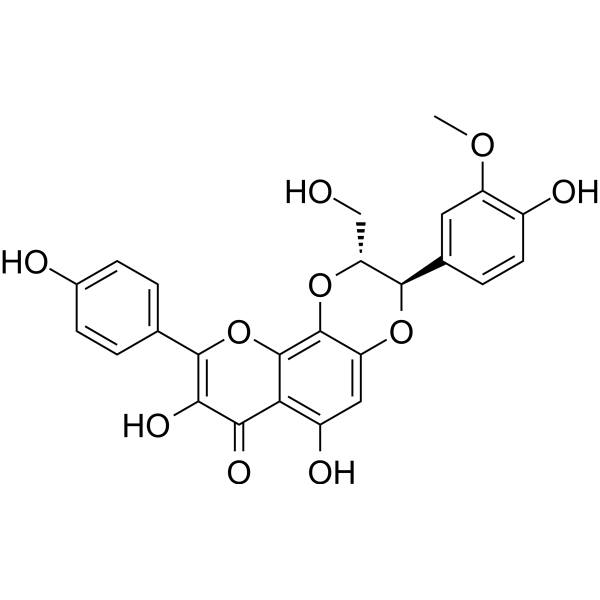 0 ImagesRhodiolin, a flavonoid, is an orally active glucose 6-phosphate isomerase (GPI) inhibitor. Rhodiolin inhibits papillary thyroid cancer (PTC) by targeting glycolysis enzyme glucose 6-phosphate isomerase GPI and suppressing PI3K/AKT/mTOR phosphorylation and induce apoptosis. Rhodiolin as a NS2B-NS3 protease inhibitor can disrupt dengue viral replication. Rhodiolin is also a potential candidate for developing anticancer strategies inhibiting CK1ε kinase. Rhodiolin can be used for the study of anti-tumor and anti-viral .
-
2-Deoxy-D-glucose 6-phosphate sodium
 0 ImagesCat. No.: HY-139409B2-Deoxy-D-glucose 6-phosphate sodium is an ATP-competitive, 2-deoxy-D-glucose non-competitive Hexokinase inhibitor, with a Ki value of 1.45 mM against bovine heart hexokinase. 2-Deoxy-D-glucose 6-phosphate sodium exerts ATP-competitive and 2-deoxy-D-glucose non-competitive inhibitory effects on bovine heart hexokinase. 2-DG inhibits glycolysis via the production and intracellular accumulation of 2-Deoxy-D-glucose 6-phosphate sodium, thereby inhibiting the functions of hexokinase and Glucose-6-phosphate isomerase, and inducing cell death. 2-Deoxy-D-glucose 6-phosphate sodium can be used in cancer-related research.
-
G6PI 325-339 (human) hydrochloride
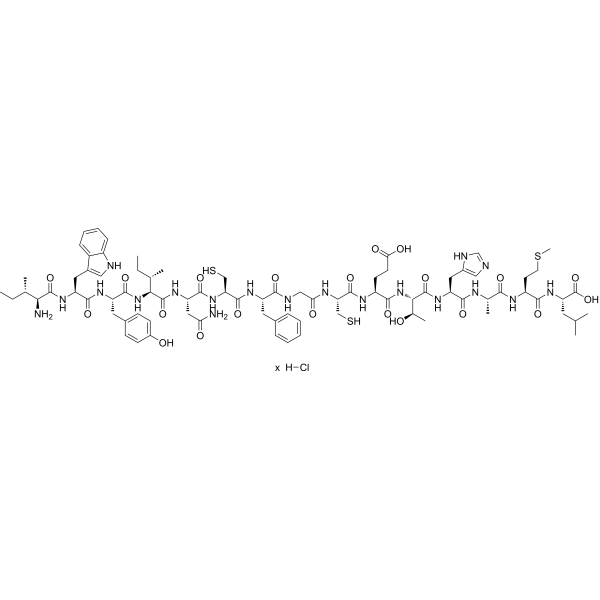 0 ImagesCat. No.: HY-P10109ASynonyms: hG6PI (325-339) hydrochlorideG6PI 325-339 (human) hydrochloride is an efficient inducer of arthritis in B10.Q mice. G6PI 325-339 (human) hydrochloride primes Th1 and Th17 cells cross-reacted with the murine G6PI protein. G6PI 325-339 (human) hydrochloride induces arthritis model operating through a T and B cell-dependent pathway but without antibody effector mechanisms.
-
2-Deoxy-D-glucose 6-phosphate
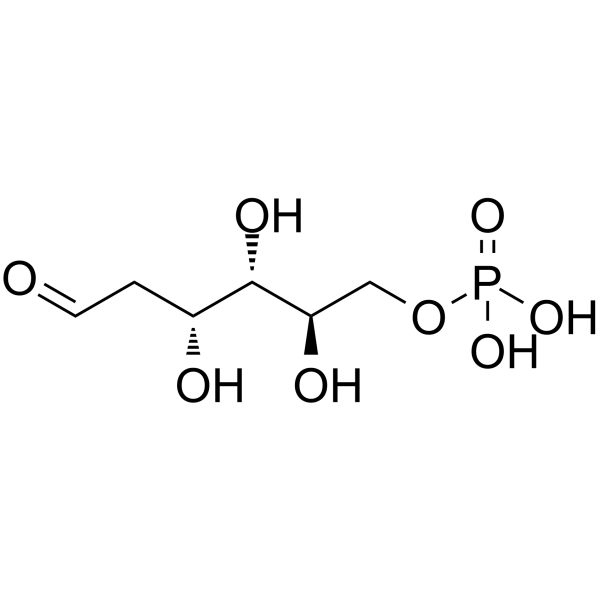 0 Images2-Deoxy-D-glucose 6-phosphate disodium is an ATP-competitive and 2-deoxy-D-glucose non-competitive Hexokinase inhibitor, with a Ki value of 1.45 mM against bovine heart hexokinase. 2-Deoxy-D-glucose 6-phosphate disodium exerts ATP-competitive and 2-deoxy-D-glucose non-competitive inhibitory effects on bovine heart hexokinase. 2-DG inhibits glycolysis via the generation and intracellular accumulation of 2-Deoxy-D-glucose 6-phosphate disodium, thereby inhibiting the functions of hexokinase and Glucose-6-phosphate isomerase, and inducing cell death. 2-Deoxy-D-glucose 6-phosphate disodium can be used in cancer-related research.



